Executive Summary
Sparv Embedded’s advanced atmospheric sensors are playing a pivotal role in ICECHIP (In-situ Collaborative Experiment for the Collection of Hail in the Plains), the largest hailstorm research initiative in over four decades. Funded by the US National Science Foundation, ICECHIP brings together 15 institutions to improve forecasting, modeling, and real-time awareness of hailstorm dynamics. Conducted across the US in May and June 2025, the study leverages Sparv’s Windsond S1 and the innovative Hailsonde probes to collect high-resolution environmental data directly within severe thunderstorms. These instruments provide critical insights into hailstone formation, movement, and storm behavior—data that could revolutionize radar-based hail detection and forecasting. Sparv’s contribution underscores the importance of precision sensing in climate resilience and hazard mitigation.
Key Learnings
- ICECHIP is the most extensive hailstorm study in over 40 years, involving 15 research institutions.
- Sparv’s Windsond S1 captures vertical profiles of wind, temperature, pressure, and humidity near hailstorms.
- The newer Windsond S2 offers improved robustness, usability, and data quality.
- Hailsondes simulate real hailstones and collect in-situ data on hailstone growth and storm microphysics.
- Each Hailsonde includes a Sparv-designed sensor board based on the Coinsonde platform.
- Hailsondes log acceleration data and transmit real-time collision counts with rain and hail.
- Data from Sparv sensors will help refine hail forecasting models and improve public safety.
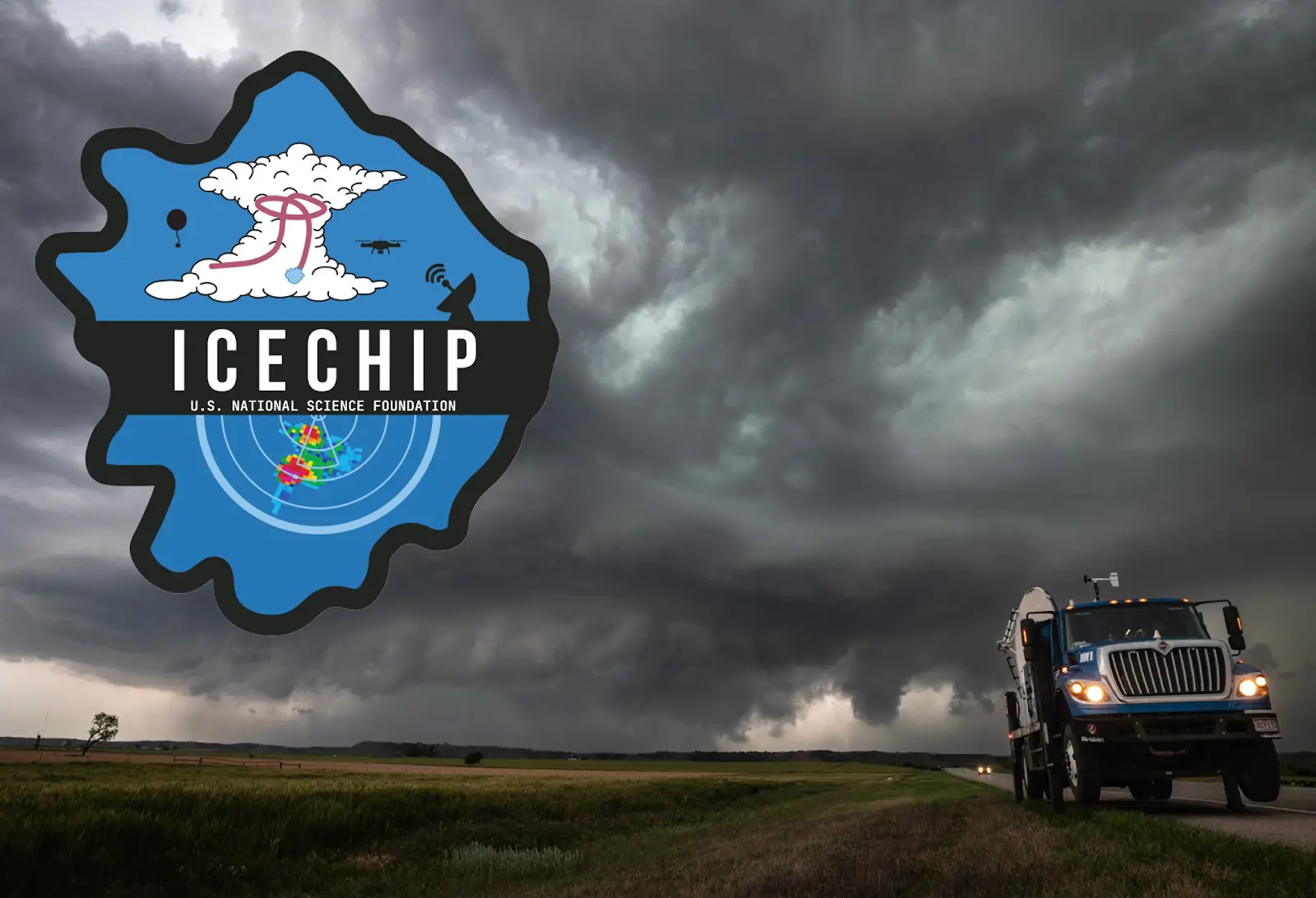
Image from UCAR (Credit Becky Adams-Selin)
Understanding the ICECHIP Hailstorm Study
Why Hailstorm Research Matters
Hailstorms are increasingly recognized as a major threat to public safety and infrastructure. Their impact spans agriculture, aviation, renewable energy, and housing—sectors vulnerable to sudden, severe weather events. Despite their destructive potential, hailstorms have historically received less scientific attention than tornadoes or hurricanes.
ICECHIP, funded by the US National Science Foundation, aims to change that. This collaborative field campaign, conducted in the central US during May and June 2025, is designed to deepen our understanding of hailstorm dynamics and improve forecasting accuracy. The project marks a significant milestone in meteorological research, bringing together experts from 15 institutions to tackle one of weather science’s most persistent challenges.
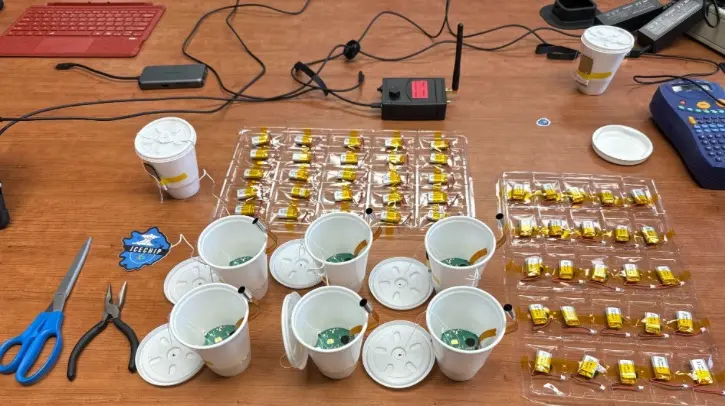
Image from UCAR (credit Victor Gensini)
Sparv Windsond S1: Profiling the Storm Environment
Sparv Embedded’s Windsond S1 is a lightweight, balloon-borne sensor system that measures atmospheric conditions as it ascends through the storm environment. It records wind speed and direction, temperature, pressure, and humidity—data essential for understanding the vertical structure of hail-producing storms.
The Windsond S1 was selected for ICECHIP due to its reliability and precision. A newer version, the Windsond S2, is now available, offering enhanced durability, ease of use, and improved data fidelity. These upgrades make it even more suitable for deployment in volatile weather conditions.
Hailsonde: Simulating Hailstones with Embedded Intelligence
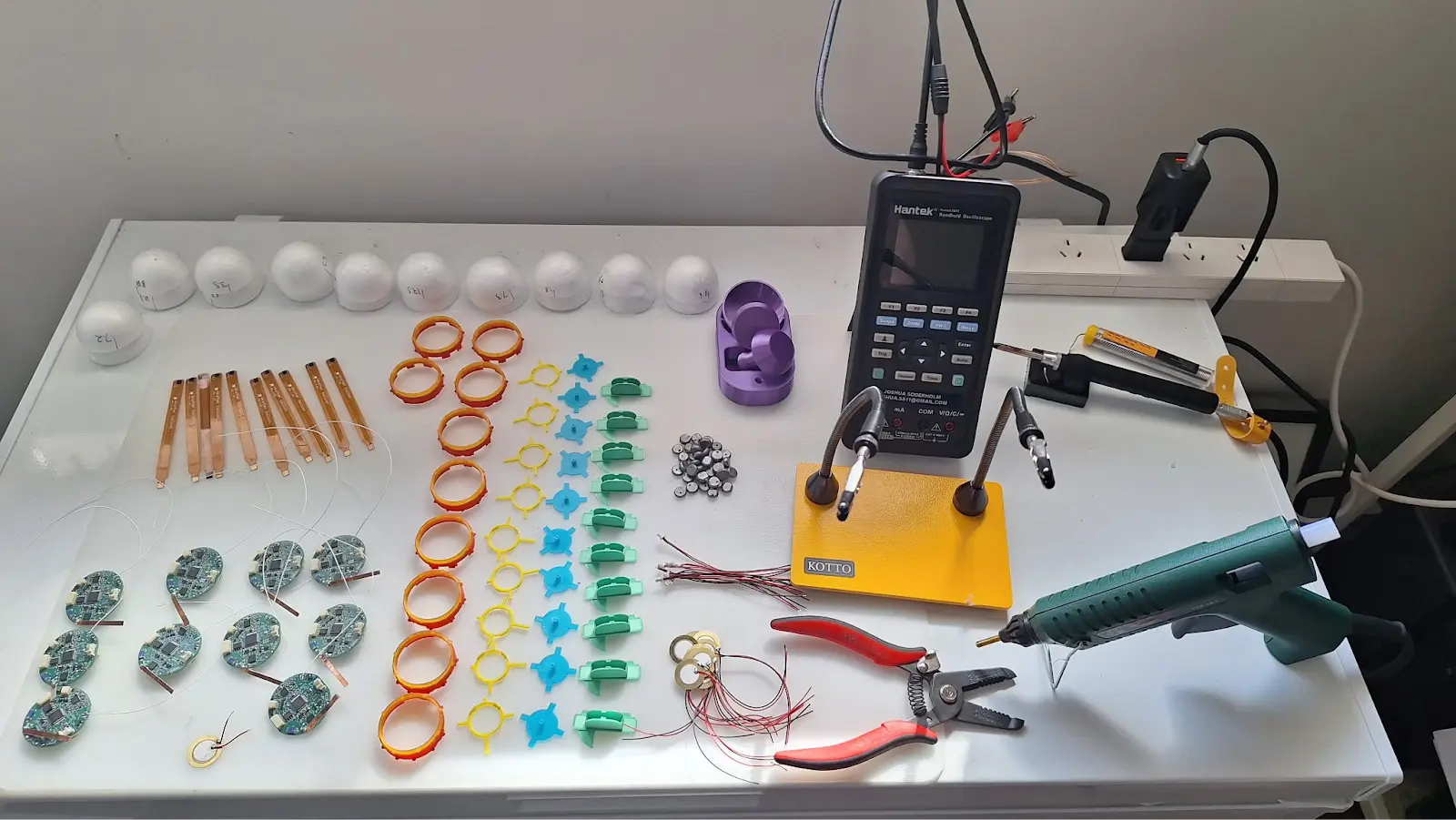
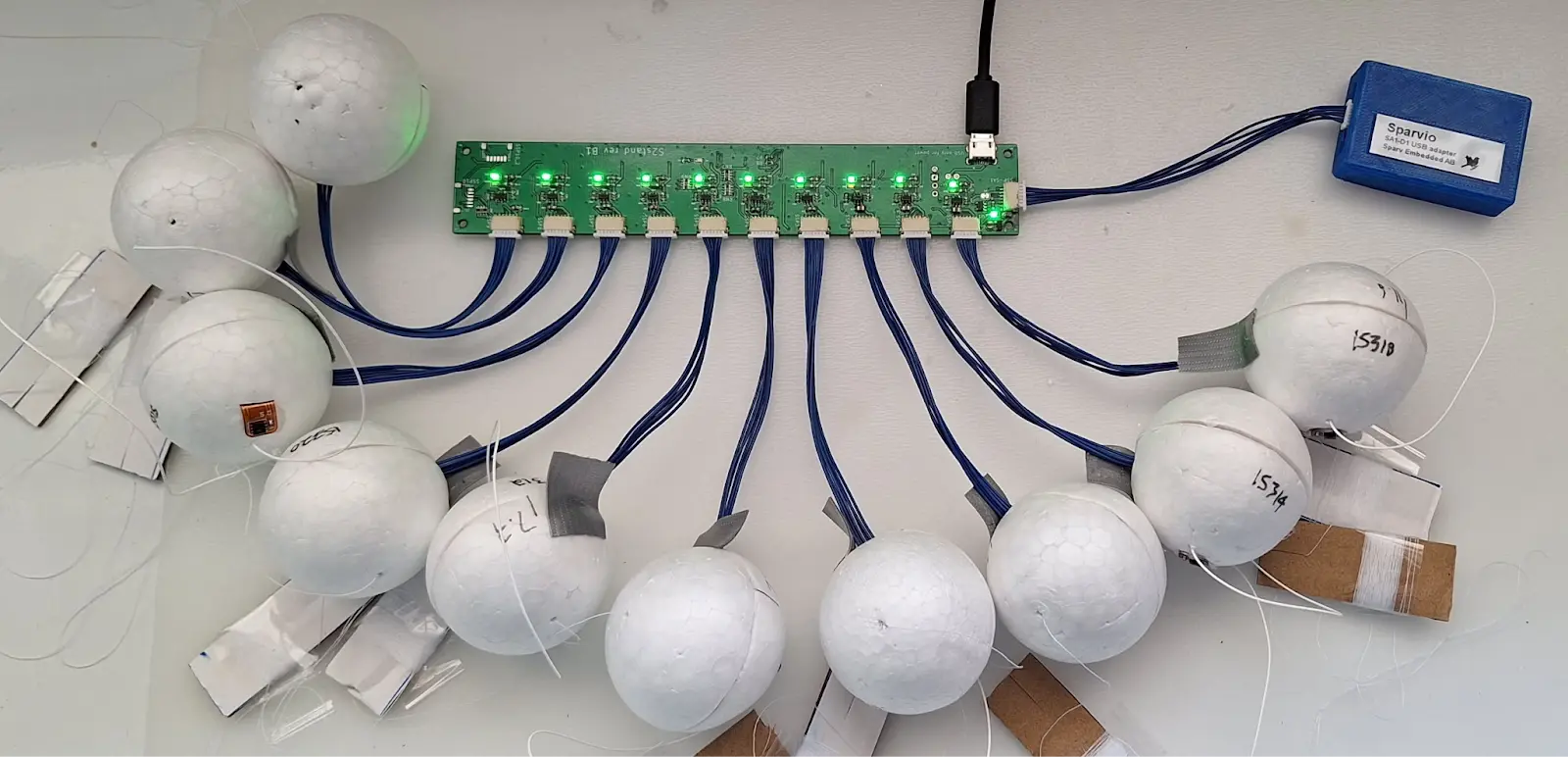
One of ICECHIP’s most innovative tools is the Hailsonde—a spherical probe designed to mimic the size (6.5 cm) and weight (24 grams) of a typical hailstone. Developed using Sparv’s Coinsonde platform, each Hailsonde contains a custom sensor board encased in a 3D-printed shell.
These probes are launched into severe thunderstorms to collect real-time data on hailstone behavior. They measure temperature, humidity, GPS location, and wind conditions, while also logging high-resolution acceleration and counting collisions with rain and other hailstones. Collision data is transmitted live to ground stations, while acceleration data is stored onboard for post-analysis.
This dual-data approach allows researchers to track hailstone trajectories and understand the microphysical processes that govern hail formation—information that could dramatically improve radar-based hail detection and forecasting.

Sparv’s Commitment to Atmospheric Research
Sparv Embedded is honored to contribute to ICECHIP and support the global effort to improve hailstorm prediction and safety. By providing cutting-edge sensor technology, Sparv helps fill longstanding gaps in meteorological data collection and modeling. The insights gained from ICECHIP will not only advance scientific understanding but also inform practical strategies for mitigating hail-related risks across industries.
About the author

Phil Chilson
Atmospheric Physicist & Customer Service
Phil applies meteorological expertise to support instrument development, deployment, and data collection. Ensures high-quality data from the Sparv instrumentation suite. Partners with clients to design customized sampling strategies.