Executive Summary
Mapping methane emissions over large areas is crucial for effective climate action, as methane is 86 times more potent than carbon dioxide over a 20-year span. Traditional flux chambers work well in localized spots but struggle to cover broad, complex terrains and separate overlapping sources. Sparv Embedded’s turnkey UAV methane-monitoring system overcomes these limits by integrating a lightweight mid-infrared methane sensor from Aeris Technologies and a 3D ultrasonic anemometer from Li-Cor on any compatible drone. Sensor data feeds into the onboard Sparvio SKH1 logger, which records to internal memory or streams live via a telemetry radio link. A 2019–2020 field trial at Linköping’s wastewater treatment plant validated reliable CH₄ hotspot detection and area flux calculations. The modular platform also supports temperature, humidity, and pressure probes, making rapid, customizable deployments possible. By enabling real-time monitoring and post-flight analysis, Sparv’s solution establishes a new benchmark for large-area greenhouse gas measurement.
Key Learnings
- Methane’s global warming potential makes CH₄ monitoring a high-impact mitigation strategy
- Flux chambers excel at small-scale sampling but lack coverage for extensive landscapes
- UAV integration of mid-infrared sensors and 3D anemometers pinpoints methane hotspots
- Sparvio SKH1 logger offers onboard recording and live telemetry for flexible data access
- Linköping University’s wastewater plant trial demonstrated robust UAV-based CH₄ mapping
- Modular design accommodates extra sensors (temperature, humidity, pressure) for full profiling
- Quick setup on various drone platforms streamlines large-area greenhouse gas surveys
Why Monitoring Methane Matters
Methane (CH₄) concentrations have surged due to human activities, making it one of the most powerful greenhouse gases. On a 20-year timescale, each kilogram of methane traps 86 times more heat than CO₂. Accurately detecting and quantifying emission sources is essential for targeted mitigation and policy planning.
Challenges with Flux Chambers
Flux chambers—sealed enclosures placed over soil or surfaces—are a standard tool for measuring gas emissions in limited areas. While precise in small plots, they cannot efficiently survey large or inaccessible terrains, nor easily distinguish emissions from adjacent sources.
UAV-Based Methane Mapping Solution
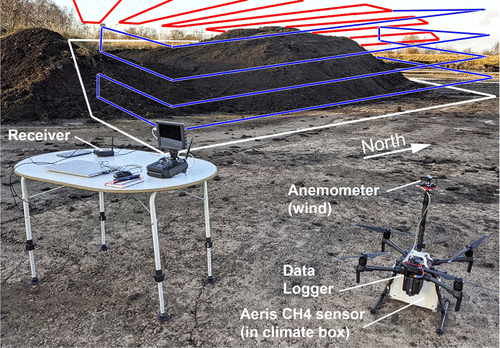
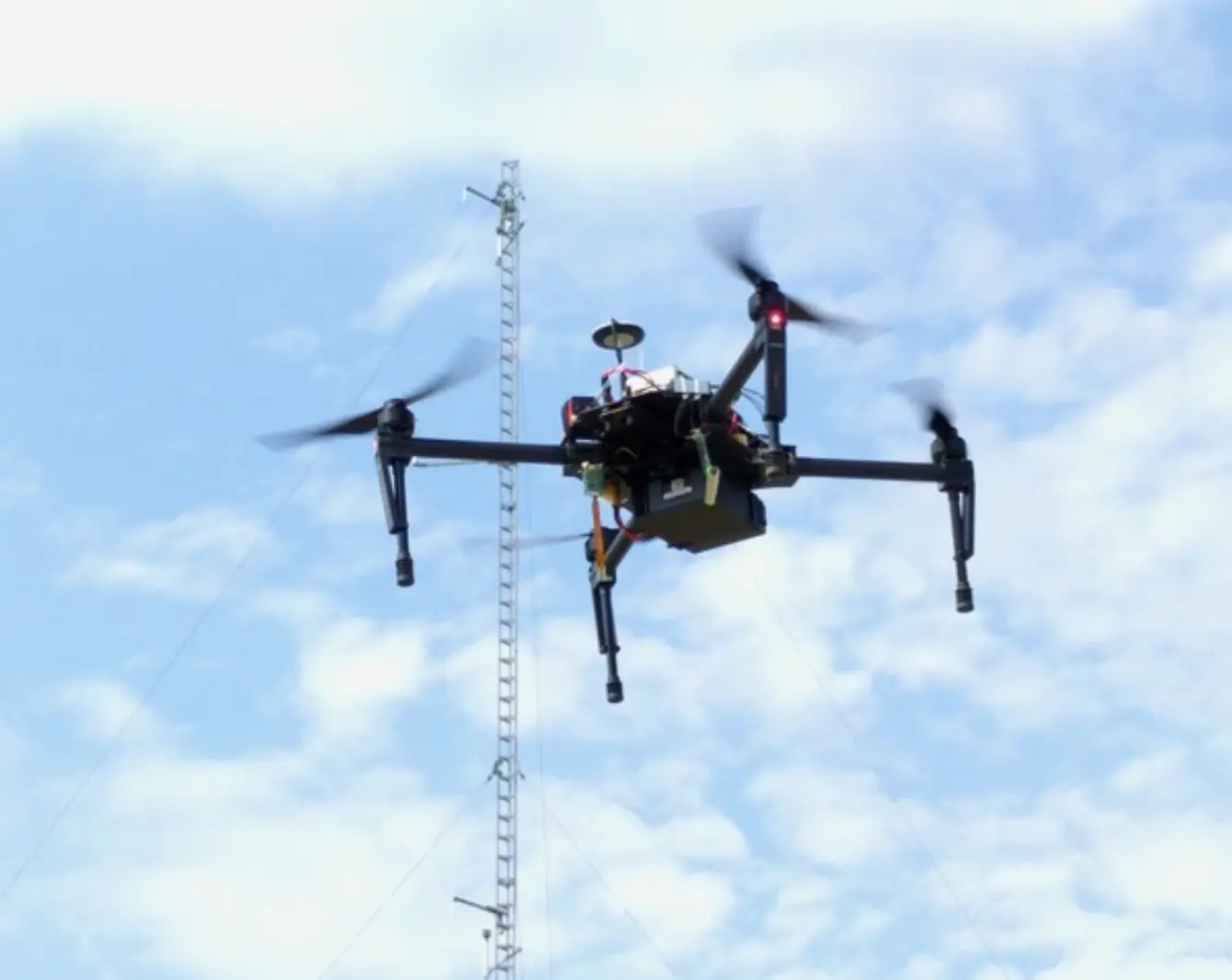
Sparv Embedded’s UAV system mounts a mid-infrared methane sensor from Aeris Technologies and a 3D ultrasonic anemometer from Li-Cor onto drones such as the DJI Matrice 210. These instruments measure CH₄ concentration and wind vectors in real time. All data routes to the Sparvio SKH1 logger, which stores readings on internal memory or streams live via a telemetry radio link. Users can attach additional probes—temperature, humidity, pressure—through the logger’s expansion ports. A full list of compatible sensors is available on Sparv’s website, and custom integrations can be added on request.
Case Study: Linköping Wastewater Treatment Plant
In 2019 and 2020, researchers from Linköping University deployed Sparv’s UAV system over a dewatered sludge deposit known for high methane release. Equipped with CH₄, temperature, and humidity sensors feeding into the Sparvio logger, the DJI Matrice 210 performed coordinated flights to map emission patterns. Sparv assisted with sensor mounting and system configuration. Results, published in ACS Earth and Space Chemistry (2021), confirmed the platform’s accuracy in quantifying area fluxes and identifying emission hotspots.
Expanding to Other UAV Platforms
Beyond the Matrice 210, Sparv’s modular design easily adapts to a variety of drone airframes. Customers selecting different UAV models can leverage the same methane, anemometer, and auxiliary sensors—with plug-and-play integration through the Sparvio logger—to suit mission requirements and flight profiles.
Conclusion
Sparv Embedded’s UAV-based methane monitoring system bridges the gap between localized flux chambers and large-area greenhouse gas surveys. By combining lightweight mid-IR sensing, precise wind measurement, real-time telemetry, and modular expansion, this solution accelerates reliable CH₄ mapping in diverse field conditions. As regulatory and research demands for accurate emission data grow, drone-based platforms like Sparv’s set a new standard for environmental monitoring.
Sources:
Hellén et al., “Quantifying methane emissions from dewatered sludge deposits using UAVs,” ACS Earth and Space Chemistry, 2021. Sensitive Drone Mapping of Methane Emissions without the Need for Supplementary Ground-Based Measurements | ACS Earth and Space Chemistry
About the author

Mattias Wilzén
Head of Finance & Customer Accounts
Oversees financial performance and ensures smooth operations for our customers, from order to delivery and ongoing support.