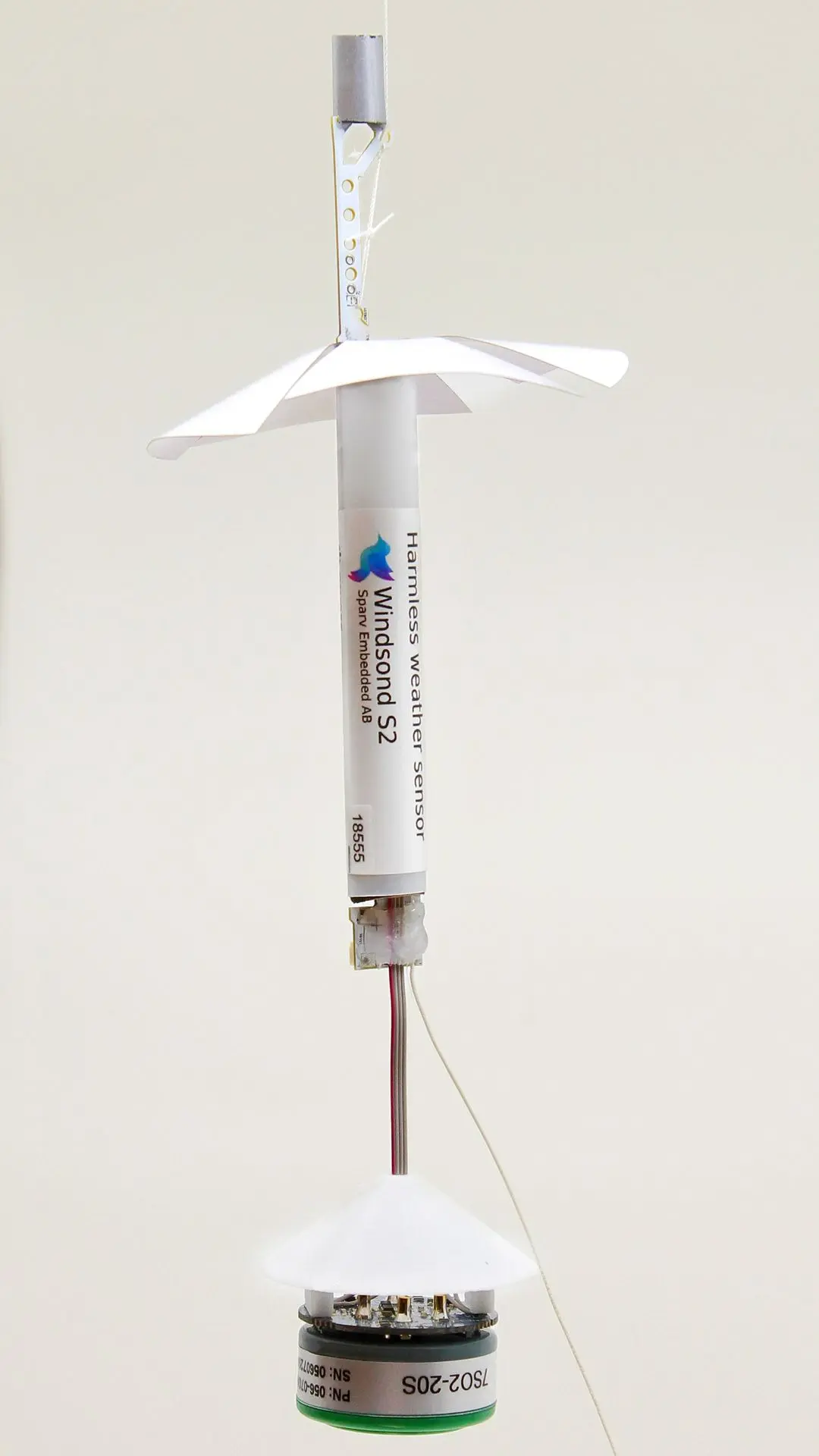
Researchers from the Physical Volcanology and Geological Risks Group at the University of Geneva are deploying Windsond S2 radiosondes with custom-integrated SO₂ sensors to study volcanic plumes at Etna, Stromboli, and Sakurajima. The setup is a first of its kind: a lightweight, expendable balloon system combining standard atmospheric profiling with real-time in-situ sulfur dioxide measurement in a single package.
The project, involving researchers from UNIGE, the Italian National Institute of Geophysics and Volcanology (INGV), and the Max Planck Institute, aims to characterize how SO₂ concentrations evolve with altitude and how volcanic clouds disperse over time. Balloon launches can be made from the ground or from UAVs, opening up measurement opportunities in environments that would otherwise be too hazardous to access directly.
The SO₂ sensor integration was developed specifically for this collaboration. The sensor module hangs beneath the sonde on a cable carrying both power and data, keeping the total added weight minimal. When we started the development, we were not aware of any comparable combination of lightweight balloon sounding with in-situ gas sensing -- which is part of what makes this project interesting to us.
The first campaign is planned for Etna this summer. We will share field results as the project progresses.